Introduction
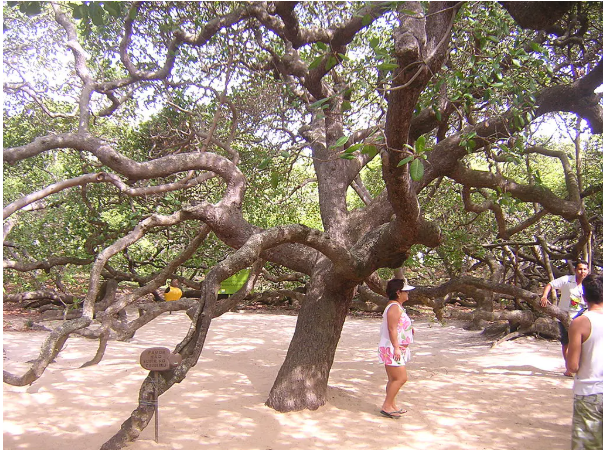
Nature has fashioned a natural marvel in northeastern Brazil, near the coastal town of Pirangi do Norte, just south of Natal, that borders on the unreal. It is a solitary tree, the Cashew of Pirangi, and is planted like a miniature forest on land. Not only is it the largest cashew tree in the world, but it is also one of the oldest botanical landmarks on the planet. With roots that reach back into the depths of history and branches that appear to have no end, this tree tells a story of patience, strength, and the silent power of nature.
Where The Tree Calls Home
The Cashew of Pirangi is native to the state of Rio Grande do Norte, Brazil, where the weather is hot, and there are ocean breezes. The tree is near a church and well-maintained gardens and can be easily explored by visitors. It is not a single tree at a distance, but an extensive spread of green plain. It is not until you take a closer look that you notice that all the branches are a part of the same living organism.
A Size That Defies Belief
It is the right reason why this tree holds a Guinness World Record. It occupies 7,300 to 8,400 square meters, which is equivalent to approximately two football fields. Its branches are outstretched and bent to the ground, where they root once again. With the passage of time, this abnormal growth system gave the impression of countless trees, a fact disproved by the DNA analysis of scientists.
To determine its size, professionals compare it to approximately 70 regular cashew trees combined. The entire outer perimeter is approximately 500 meters long, and it is impossible to absorb it all simultaneously.
An Age Measured in Centuries
The Cashew of Pirangi is estimated to be more than 1,000 years old. This tree was already rooted long before modern cities, cars, and even colonial Brazil. It endured climate changes, human growth and the gradual passage of time. There are not many living creatures on the planet that can boast such a long and uninterrupted life.
Seasonal, Fruitful Colour Blush
Throughout most of the year, the tree boasts peaceful, green leaves that provide shade and coolness from the heat. It is alive with colour, however, from November to January. Large clusters of bright red, bell-shaped cashew fruits are evident. The tree yields approximately 60,000 cashew fruits annually, which again appears equally impressive in terms of size.
Cultural And Historical Significance
Pirangi, the Cashew is not just a beauty to the locals. Its roots are believed by many to have originated with the Portuguese colonies in Africa, related to the colonial history of Brazil. It evolved into a symbol of pride and identity for Pirangi do Norte across generations. It also serves the local economy today, attracting tourists who purchase cashew-based foods, beverages, and handmade products at the local stalls.
A Walk Beneath the Canopy
There is something like a natural cathedral when one walks under the tree. The dense trees block the scorching sun, creating a calm and serene environment. Trails lead through the trees, and one can sit down somewhere to think or listen to the silence. The tree appears endless from some angles, with its branches extending far beyond the eye’s expectations.
Conclusion
The Cashew of Pirangi reminds us that there is no hurry in nature, and it nonetheless becomes great. It is more than just a tourist attraction due to its immense size, antiquity, and cultural significance. It is a living testament to perseverance and balance. When people pass under its shade, they do not just admire a tree. They relate to a millennium of life that is yet to mature, yet to give, yet to educate us on why conservation of nature is indeed essential.